 Revapin
Understanding the Pinterest Algorithm in 2026
The Pinterest algorithm decides which pins show up in search, the home feed, and related-pin suggestions. It leans heavily on what a pin is about and how people react to it, and much less on who posted it or how new it is. That's why a good pin can keep spreading months after it went up.
What the algorithm actually reads
A few signals do most of the ranking. It reads the text — the pin's title, description, and the board it sits on — to work out the topic. It reads the image itself, since Pinterest can recognise what's in a picture. And it watches behaviour: saves, close-ups, and clicks tell it a pin is worth showing to more people.
Why quality of engagement beats volume
A save counts for more than a passing glance, because saving signals real intent to use something later. A click through to the linked page counts too. So a pin that a smaller number of people genuinely act on can outperform one that lots of people scroll past, which is the opposite of how a fast-moving social feed works.
What to do with that
The practical takeaways are simple:
- describe pins in plain, specific words so the topic is unmistakable;
- put pins on clearly named, on-topic boards;
- make images people want to save, not just glance at;
- give it time — pins build slowly, then keep going.
Learn from pins that are already winning
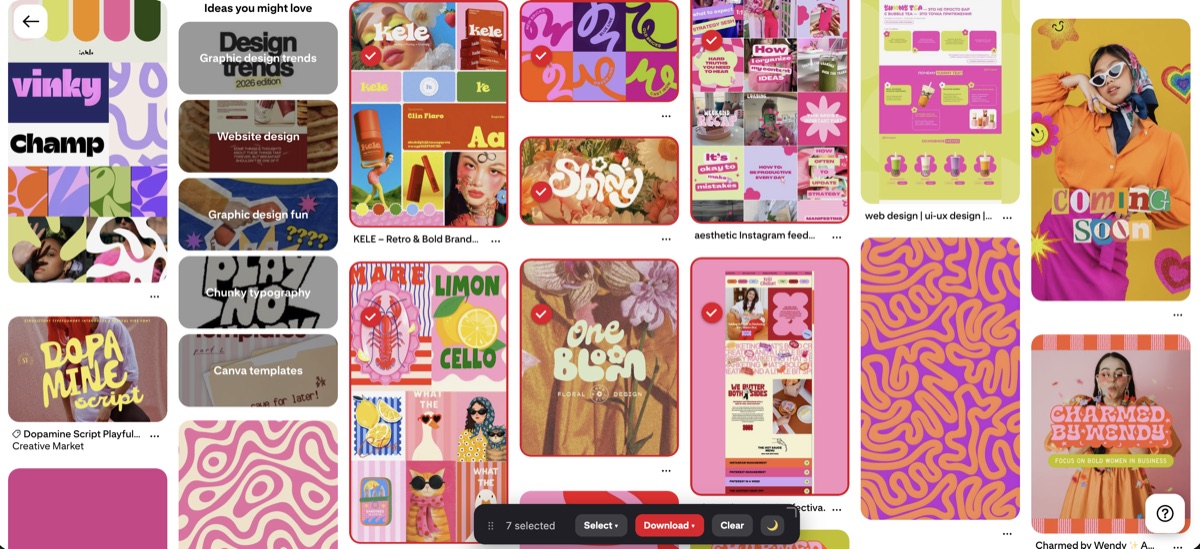
The best signal of what the algorithm rewards is the set of pins already doing well in your niche. Saving a batch of them to study — the images, the crops, the styles that keep getting saved — teaches you more than any general advice. Revapin downloads those reference pins at full resolution so you can pull them apart properly.
You can't game the algorithm, but you can feed it clearly: a strong, saveable image, an honest description, the right board, and patience. Do that and the system does the spreading for you over time.
Revapin is not affiliated with, sponsored by, or endorsed by Pinterest. Pinterest is a trademark of Pinterest, Inc.