 Revapin
The Psychology of Why People Use Pinterest
People use Pinterest to plan the life they want, not to broadcast the one they have. That's the psychology behind it: saving a pin is a small act of intention aimed at your future self.
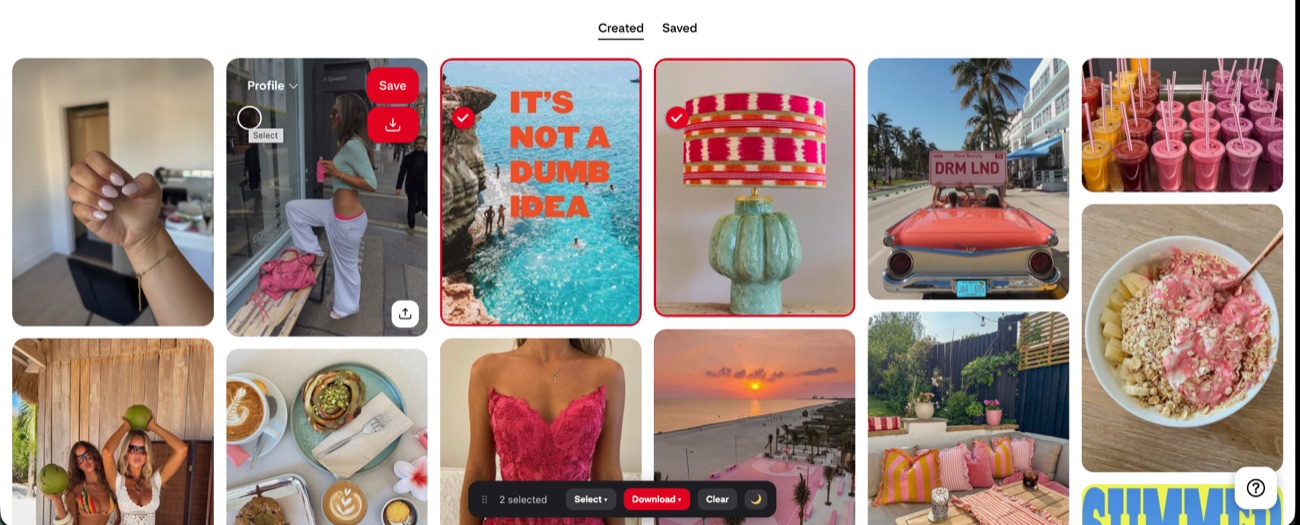
Planning instead of performing
Most social platforms are about the present and about other people watching. You post, and you wait to see how it lands. Pinterest runs the other way. You're mostly saving for yourself, quietly, and no one's keeping score. That shift in purpose changes how the whole thing feels. You're not performing a life; you're sketching one.
Why it feels calmer than a feed
Scrolling a typical feed can leave you wound up: outrage, comparison, the pull to keep refreshing. Pinterest tends to feel gentler because the images are things people chose to want. A wall of kitchens or coats or garden beds isn't trying to provoke you. There are fewer comments to argue in and less pressure to react. For a lot of people it lands closer to flipping through a stack of magazines than checking a notification.
Saving as a small act of intention
Every pin you save is a tiny decision: I might want this. Do it enough and a board becomes a record of what you're moving toward — a trip, a home, a wardrobe, a project. That's oddly satisfying because it makes a vague hope feel a little more real. The board is proof you're at least thinking about it, even if you haven't started yet.
Turning intentions into something you use
Here's where a lot of boards stall. They fill up with good intentions and then sit there, admired but never acted on. The pins stay locked inside the app, easy to scroll past and easy to forget. Getting them out changes that. When your saved ideas become actual files on your computer, you can drop them into a moodboard, print them, hand them to a contractor, or line them up next to your own work. A download extension makes the jump quick. Revapin saves a board to your machine as image files, so the intentions you collected turn into references you can actually put to work.
Boards tend to do their best work when they:
- point at a specific plan, not a vague mood;
- get revisited, not just added to;
- leave the app and end up somewhere you'll actually see them.
The appeal of Pinterest is that it's built around wanting things and planning for them, in a quiet way most feeds don't allow. The payoff comes when those saved intentions stop being a wish list and start being something you use.
Revapin is not affiliated with, sponsored by, or endorsed by Pinterest. Pinterest is a trademark of Pinterest, Inc.